The Long Shadow of Being Bullied for Being Queer: EMDR Therapy Melbourne for School-Based Trauma
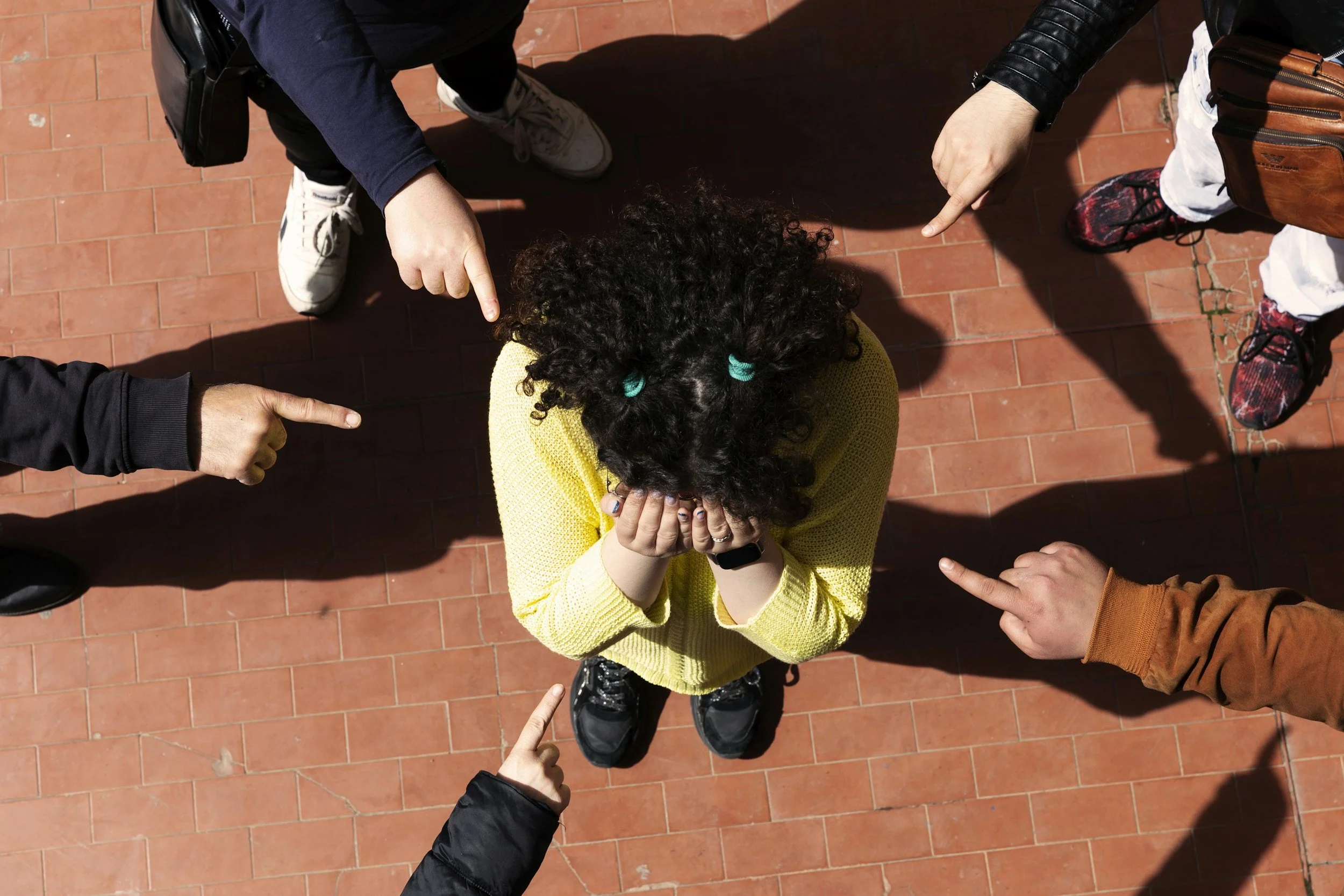
Every day as a teenager, you woke up with a familiar feeling of dread, anticipating yet another day at school. Would today be a lucky day and you'd avoid that bully, or would you be humiliated yet again, left feeling small, alone, and like you wanted to disappear? Nearly all of the LGBTQ+ clients I see for EMDR therapy in Melbourne have experienced some form of bullying at school, usually around not fitting into typical gender roles, their differences pointed out and ridiculed. These bullying experiences are often chronic and ongoing across long periods of time, shaping how we feel about ourselves, the world, and our relationships. More often than not, when the bullying is connected to being queer, it's kept secret, because being queer is itself something many of us were pushing down and avoiding at the time.
You're an adult now and your school years are long behind you, but you carry that history in your social anxiety, in that loud, punishing inner critic that puts you down any time you have an awkward social interaction. This is the long shadow of trauma on your present life, and it's what EMDR therapy in Melbourne can help with. With EMDR, we revisit bullying-based memories so the negative beliefs attached to those memories no longer bother you. Beliefs like I'm worthless or I don't belong are the meaning we make of painful experiences, and they can recede with EMDR treatment. When the memories that built those beliefs no longer carry a charge, the belief loses its weight, and we can work on installing something truer in its place.
Why Queer Kids Are Disproportionately Targeted
Adolescence is overwhelmingly about fitting in so you belong. This is inherently difficult for queer teenagers, given how they express themselves, their mannerisms, who they're drawn to, and what their interests are. I, for instance, only hung out with girls in high school, often the only boy in an all-girl group. That contrast meant I stood out, that I was different to the other boys. I've even heard accounts from clients of teachers joining in on the ridicule of LGBTQ+ kids, further worsening an already unsafe environment.
The large majority of queer-based bullying tends to come from straight boys who gain social capital from their male peers by asserting dominance over those perceived as less than. To this day, as a 41-year-old, if I find myself in a group of only straight men, I feel uneasy. That is the lineage of the bullying I experienced as a teenager, and it gives me a particular understanding of what my clients bring into the room.
In adolescence, we are still forming our sense of self, and our need to belong is particularly acute at this stage of development. This often results in significant self-betrayal, moulding ourselves into someone we are not just to survive. For me, that looked like not doing dance class out of fear of further bullying, something I regret to this day. Bullying has a disproportionate impact on our sense of self. It leaves us feeling worthless, like freaks, like we can't trust anyone. Clients have described to me experiences of being physically humiliated by other boys, their more effeminate voices mimicked for laughs, their bodies grabbed and mocked. These experiences are profoundly othering and leave marks that don't simply fade when the school bell rings for the last time.
How Bullying Gets Stored as Trauma, And Why Time Alone Doesn't Heal It
Bullying gets stored as trauma because it overwhelms our nervous system's capacity to cope. The memory is often pushed into our subconscious and guarded by a vigilant, anxious part of our psyche. This is particularly devastating for LGBTQ+ kids who keep these experiences secret, because in doing so, they don't get the support they need to make sense of what happened to them.
A traumatic experience is different from a merely difficult one. With trauma, we actively avoid thinking about the memory, and when we do recall it, the distress is still present in our bodies, even years later. Bullying experiences tend to stay with us because they were ongoing and repeatedly challenged our sense of belonging and safety.
Without the means to speak about these experiences, we don't develop language around them. We don't get the support to feel our anger and our sense of injustice about being humiliated, which is an important part of healing. We don't learn to stick up for ourselves because often that invites more bullying or worse. And so, regardless of how hard we try to push these experiences away as adults, we hold them in our bodies as tension, anxiety, and a chronic undercurrent of not being quite good enough.
How Queer Bullying Trauma Shows Up in Adult Life
LGBTQ+ adults who were bullied often come to counselling with difficulties around anxiety, self-esteem, and maintaining boundaries. They constantly second-guess their worth when dating and may find themselves pursuing emotionally unavailable partners, because that kind of treatment feels, on some level, familiar. They're not used to being treated with respect, so friends or partners who put them down can feel almost normal.
They may struggle with public speaking because their voice was mocked at school. They may be reluctant to try anything creative or physical that crosses gender norms, worried it will be seen as too gay or too butch. Social situations that others find easy can feel fraught, that anxious teenager is still in there, scanning for disapproving looks, half-convinced others might be laughing.
When the Bully's Voice Becomes Your Own
When one particular bully is persistent over a long period of time, their voice can become internalised as our inner critic. An internal voice that criticises us any time we do something that might threaten our need for belonging by making us stand out or seem different. This is the inner critic that tells you you're fat long after you've lost the weight, or tells you not to wear certain things for fear of looking too gay. It's the voice that says, "Why did you s when yo” when you dare to make a joke with friends, and has you reading disapproval into other people's expressions when they weren't thinking about you at all.
How EMDR Therapy Melbourne Helps Process School-Based Trauma
EMDR helps clients identify the core bullying memories that are still having an impact today. We usually start with the earliest, most overwhelming bullying memory, the one that later bullying experiences connect back to. In a processing session, I activate the memory in your mind, and we begin bilateral stimulation, either eye movements or body taps, to keep your working memory occupied so you are half present with me in the room and half with the memory. This allows the feelings associated with the experience to rise in waves until there are no longer any negative feelings attached to it. The image of the memory fades. You can recall what happened without the emotional sting, and we can install a positive belief, I'm okay as I am, or it wasn't my fault, where the negative belief once lived.
A client of mine, I'll call him Peter, came to see me carrying a long history of bullying at school, which he had never spoken to anyone about. When he first described these experiences in our sessions, it was clear the memories were still alive in his body; he would begin to shake, and his breathing would become shallow just talking about them. He came to me primarily for significant social anxiety that had left him increasingly isolated, turning down invitations and spending most of his time alone.
Over the course of our EMDR work together, processing the core bullying memories one by one, something began to shift. Peter started to feel more at ease at social events, less vigilant, less convinced that people were judging him. He rediscovered that he was actually funny, that people enjoyed his company and sought it out. The inner critic that had been running commentary on his every move began to quieten. When it did flare up, Peter had developed enough self-compassion to meet it differently, to recognise it as an old, scared voice rather than the truth about who he is. He went from dreading social situations to genuinely looking forward to them. That is what becomes possible when the past is no longer running the present.
What Becomes Possible with EMDR therapy Melbourne
The changes I've witnessed in clients who have processed bullying trauma through EMDR are some of the most meaningful I see in my practice. Not just a reduction in symptoms, but a genuine reclaiming of self.
Socially, clients find they can walk into a room without that familiar tightening in the chest. The hypervigilance that used to exhaust them, the constant scanning for threat, the reading of every expression, softens. They can be present with people rather than managing them from a distance. For many this is the first time social connection has felt genuinely easy rather than something to endure.
The inner critic loses its authority. It may not disappear entirely, but its volume drops and its grip loosens. Clients develop the capacity to meet that voice with curiosity rather than capitulation, to recognise where it came from and choose not to follow where it leads. This shift alone can significantly change the texture of daily life.
In dating and relationships, clients find they can show up with more of themselves. They become better at recognising when they're being treated poorly and are more willing to walk away from it. They begin to pursue connections that actually feel good rather than ones that merely confirm what the bully told them about themselves all those years ago.
If you'd like to read more about how EMDR therapy in Melbourne can help with LGBTQ+ trauma more broadly, I've written about that here.
Ready to Put Your History of Bullying Behind You?
Experiences of bullying as a kid are truly awful. It is bad enough that you had to go through that in the first place without having to live with its ongoing impact now. It takes real courage to go back to painful experiences of the past, and the changes that become possible on the other side are worth it.
If you feel like EMDR therapy could be right for you, I offer a free 30-minute consult to explore whether it's a good fit for your specific situation. You can book that below.
About the Author
Matthew Austin | Counsellor & Psychotherapist, Melbourne
Matthew Austin is a Melbourne-based counsellor and psychotherapist who has worked with LGBTQIA+ individuals for over a decade. He has held roles at both Thorne Harbour Health and Queerspace, where he developed a deep understanding of the external forces that shape how LGBTQIA+ people see themselves. His background working with children and adolescents who have experienced trauma and neglect informs his understanding of how early experiences shape the lens through which we view ourselves, others, and the world.
Matthew holds a Bachelor of Social Work, a Certificate in Developmental Psychiatry, and an Advanced Diploma in Gestalt Psychotherapy, and has completed EMDR Levels 1 and 2. He is a mental health social worker and offers Medicare rebates.
His approach draws on IFS, EMDR, and Gestalt therapy to help LGBTQIA+ clients access the compassion, calm, and clarity that has always been there — beneath the self-criticism and distress.
Matthew works with LGBTQIA+ adults in Melbourne. To book a 30-minute check-in, visit my contact page